Mobile Repair Basics: 10 Powerful Tips Every Smart Beginner Should Know (2025 Ultimate Guide) mobile repair basics 🔧 Introduction In today’s digital world, mobile phones have become a lifeline for communication, work, and entertainment. With millions of devices in use, the demand for mobile repair technicians is growing rapidly. If you're someone who loves technology or wants to start a new career, understanding mobile repair basics is the first step on your journey. Mobile repair basics cover everything from identifying phone components to safely opening a smartphone and diagnosing common issues. These foundational skills are essential whether you want to repair phones professionally or just fix your own. Without a strong grip on the basics, even experienced technicians can struggle with complicated repairs. One of the best things about learning mobile repair basics is that you don’t need a fancy degree or expensive equipment to get started. All you need...
Get link
Facebook
X
Pinterest
Email
Other Apps
CRT TV Vertical Deflection Problems & Fixes
Get link
Facebook
X
Pinterest
Email
Other Apps
-
CRT TV Vertical Deflection Problems & Fixes
introduction :
CRT TV Vertical Deflection Problems & Fix
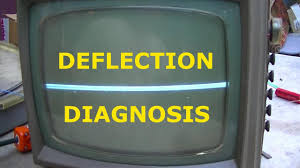
CRT TV Vertical Deflection Problems - Cathode Ray Tube (CRT) TVs are still used in many households, but one of the most common issues is CRT TV vertical deflection failure. This problem causes display distortions such as horizontal lines, vertical collapse, or partial screen display. In this guide, we’ll explore the common causes and fixes for CRT TV vertical deflection problems.
CRT TV Vertical Deflection Problems & Fixes
Symptoms of CRT TV Vertical Deflection Problems
Flickering or wavy vertical lines
A single horizontal line across the screen
The image is squashed from top to bottom
The lower or upper half of the screen is missing
Flickering or wavy vertical lines
Sudden screen collapse after prolonged use
If your CRT TV is displaying any of these issues, immediate troubleshooting is required to prevent further damage.
Causes of CRT TV Vertical Deflection Issues
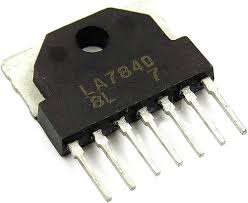
Faulty Vertical Output IC – The vertical IC controls the vertical scanning. If it fails, the display collapses.
Defective Electrolytic Capacitors – Bad capacitors in the vertical section can cause flickering or a collapsed display.
Cold Solder Joints – Loose soldering points on the vertical output IC or yoke connector can lead to deflection failure.
Damaged Vertical Deflection Coil – The yoke coil responsible for vertical scanning might be damaged.
Faulty Power Supply to the Vertical Circuit – If the power supply voltage is too low, the vertical section won’t function properly.
Malfunctioning Flyback Transformer – Some CRT TVs use the flyback transformer for vertical deflection power.
These faults can develop over time due to aging components, electrical surges, or overheating.
Fixes for CRT TV Vertical Deflection Problems
1. Check and Replace the Vertical Output IC
vertical IC on the circuit board
Locate the vertical IC on the circuit board (usually marked as LA78XX, TDA8172, etc.).
Measure the voltage supply to confirm if it’s receiving power.
Replace the IC if it's faulty.
2. Inspect and Replace Defective Capacitors
Look for swollen or leaking electrolytic capacitors in the vertical circuit.
Replace with capacitors of the same rating (e.g., 1000uF, 35V).
A capacitance meter can help verify if capacitors are within specification.
3. Resolder Cold Joints
Check for loose solder points around the vertical IC and yoke connector.
Use a soldering iron to reflow the connections.
Ensure proper application of flux to avoid dry joints.
4. Test the Vertical Deflection Coil
Measure coil resistance using a multimeter.
If open or shorted, replace the yoke coil.
Ensure the deflection coil connections are firmly attached.
5. Verify Power Supply Voltage
Check the supply voltage to the vertical IC (often 24V or 30V depending on the model).
If low, troubleshoot the power supply section.
Inspect the power supply board for burnt components or damaged resistors
6. Examine the Flyback Transformer
Inspect for damage or burn marks.
Replace if faulty, as it affects both horizontal and vertical deflection.
If the flyback transformer is overheating, check surrounding circuits for faults.
Additional Troubleshooting Tips
Use a Service Manual – Different CRT TV models may have variations in circuit design.
Check for Heat Damage – Components near heat sinks might degrade faster.
Test with an Oscilloscope – Waveform analysis can help identify signal issues in the vertical circuit.
Inspect the Wiring Harness – Loose or damaged wires can cause intermittent vertical deflection problems.
Preventive Maintenance Tips
Keep the TV in a dust-free environment to prevent overheating.
Avoid power surges by using a stabilizer.
Periodically inspect circuit boards for aging components.
Clean ventilation areas to prevent heat buildup, which can shorten component lifespan.
Handle CRT TVs with caution, as they store high voltages even after being unplugged.
Conclusion
CRT TV vertical deflection problems are repairable with basic troubleshooting. By identifying faulty components like the vertical IC, capacitors, or yoke coil, you can restore your TV’s display. If unsure, consult a professional technician for assistance. Regular maintenance can prevent many common CRT TV failures.
How to Repair 220V AC to 5V DC SMPS Power Supply Easily – Complete 2025 Guide SMPS Repair • 2025 Updated How to Repair 220V AC to 5V DC SMPS Power Supply Easily – Complete 2025 Guide In this detailed guide, you will learn how a 220V AC to 5V DC SMPS power supply works and how to repair it step by step. We will cover safety rules, internal blocks, every important component, and a practical troubleshooting flow used by professional technicians. 🔧 Skill Level: Beginner to Intermediate ⚡ Input: 220V AC • Output: 5V DC SMPS 📅 Updated for: 2025 Quick Navigation Table of Contents 1. Introduction: What Is a 220V AC to 5V DC SMPS? 2. Safety First: High Voltage Precautions 3. Tools and Basic Skills You Need...
How to Assemble a 5.1 Amplifier Easily (2025 Full Guide) | Tamil Technicians English How to Assemble a 5.1 Amplifier Easily – Complete 2025 Guide Want to build your own 5.1 home theater amplifier at home or in your small workshop? In this Tamil Technicians guide we will see what components you really need, how to wire everything safely, how to choose the correct speakers and ohms, and how to remove hum and noise like a pro. DIY Audio Repair Beginner + Technician Friendly Updated for 2025 Many technicians and hobbyists love to assemble an amplifier, but get confused when it comes to 5.1 systems – there are more channels, more wires and more chances for ...
Fix Low or Distorted Audio in CRT TVs – Ultimate Troubleshooting Guide Introduction Having trouble with low or distorted audio in CRT TVs ? This issue can be frustrating, but don’t worry! Audio problems in CRT TVs are common, especially in older models that have been in use for several years. Poor sound quality can result from various factors, including damaged components, improper settings, or electrical issues. Identifying the root cause is crucial for an effective fix. Fortunately, many of these problems can be resolved with simple troubleshooting techniques that don’t require advanced technical knowledge. A CRT TV’s sound system is not as sophisticated as modern flat-screen TVs, but it is still designed to produce clear audio. If you notice distortion, muffled sounds, or extremely low volume, your TV may be suffering from a technical issue. This could be due to internal components failing over time, interference from nearby devices, or simple misconfigurations in...




Comments
Post a Comment